
Guides
The three channels that carry social influence, explained plainly
Social influence basics: the three channels influence travels on, the disclosure test that sorts persuasion from manipulation, and what real consent needs.
Influence is not occasional, reserved for weak people, or confined to sales meetings; it is the ordinary condition of living around others.
You know almost nothing first-hand, and most of what you believe came through somebody. Most of what you do is shaped by what people around you do; no version of a social life switches this off.
So the useful question is never whether you are being influenced. It is which kind, through which channel, and whether the thing doing the work would survive being pointed at.
What to take away
- Influence runs through three channelswhat you are told, what you see others doing, and what the relationship costs you.
- The test that matters is disclosure. If knowing exactly how you were persuaded would not change your decision, the persuasion was legitimate.
- Anything that needs you not to notice it is in a different category, and the only correct response to it is to recognize it and step back.
The three channels
Information. Somebody knows something you do not, and you update. This is the channel that is supposed to be doing the work in almost every decision, and it is the one that fails quietly, because bad information looks exactly like good information from the inside.
Three Channels of Influence
Information
- What it is
- Someone knows more
- Legitimate version
- Checkable facts
- Version to refuse
- Uncheckable claims
- Failure mode
- Bad info looks good
Norms
- What it is
- Observing others' behavior
- Legitimate version
- Real evidence of behavior
- Version to refuse
- Misleading group
- Failure mode
- Wrong group observed
Relationship
- What it is
- Cost of saying no
- Legitimate version
- Acknowledged openly
- Version to refuse
- Unacknowledged pressure
- Failure mode
- Agreement without merit
Norms. You observe what people around you do and treat it as a guide. This is not stupidity, it is an efficient shortcut in a world where you cannot personally verify much. It becomes a problem when the observed behavior is not evidence of anything, or when the group you are reading is not the group you are actually in.
The relationship. Saying no has a cost: an awkward conversation, a lost favor, a worse standing with someone you have to keep dealing with. This channel is the most honest of the three when it is acknowledged and the most corrosive when it is not, because it produces agreement that has nothing to do with the merits and everyone involved can pretend otherwise.
Real situations use all three at once, which is why untangling them afterwards is hard and why the useful skill is noticing which one is carrying the weight while it is happening.
The legitimate version
- Information
- Here is what I know, and here is how you can check it
- Norms
- Many people in your position chose this, and here is who they are
- Relationship
- I would like you to do this because of what we are to each other
The version to refuse
- Information
- Here is a claim arranged so that checking is impractical
- Norms
- A manufactured impression that everyone already agrees
- Relationship
- Making refusal cost something you were not told about
The disclosure test
The single line this site keeps returning to: influence that survives being explained is legitimate, and influence that depends on concealment is not.
Run it forward. Imagine the person you persuade learns, in complete detail, exactly what you did and why it worked. If their decision stands, you gave them something real: better information, an accurate picture of what others do, and an honest account of what the relationship means to you.
If their decision reverses, the part they could not see did the work. What you obtained was not agreement.
The test is useful in both directions. As a check on your own conduct it is fast and uncomfortable, which is what makes it work. As a check on someone else's, it converts a vague unease into a specific question: what would I have to find out for this to stop feeling like a good idea?
It is also the reason this site treats concealment-dependent tactics as things to recognize rather than things to use. A technique whose whole function is to be invisible cannot be taught as a method here without teaching the concealment along with it.
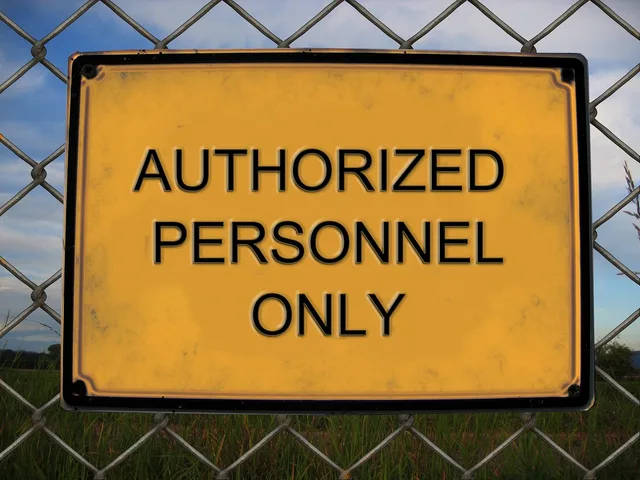
A signpost is influence in its plainest form. It points, it says where it points, and anyone can read the arm and walk the other way. Nothing about it stops working once you understand how it works, which is the whole of the test above rendered in painted wood.
Consent, and what makes it real
The formal version of the same idea lives in the requirements around informed consent: an agreement counts when the person understood what they were agreeing to, had the relevant facts, and was free to decline.
Those three conditions map onto the three channels exactly. Understanding is the information channel. Having the relevant facts includes an accurate picture of what others actually do. Being free to decline is the relationship channel, and it is the one most often quietly missing while the other two look fine.
At the far end, when the cost of refusing is made severe enough, influence stops being persuasion at all and becomes coercion. The line between a strong argument and a threat is not about volume or intensity. It is about whether refusing leaves you where you were, or worse than where you were.
Pressure is not the same as persuasion
A useful diagnostic when something feels wrong but you cannot name it: separate the case from the conditions.
The case is what is being argued. The conditions are everything about how it is being put to you: the timing, the audience, the deadline, who else is in the room, how easy it is to say you will think about it.
A good case is indifferent to conditions. It reads the same tomorrow, in writing, alone, with nobody waiting for an answer. When somebody works hard on the conditions, they are telling you something about the case, and it is worth hearing.
This is the practical basis of nearly every defense worth having:
Defenses Against Pressure
- Ask for it in writing
- Take the decision out of the room
- Notice deadlines that appeared with the offer
- Ask who else would benefit, and how
- Say out loud that you might say no
Being on the other side of it
If you are trying to persuade somebody, the same framework tells you what to do, and it is mostly about removing your own advantages.
Write your argument so it works without you there and reads cold. Name the strongest objection yourself before they find it, because an objection they find themselves costs you far more.
Make refusal cheap, then act as if it was; a refusal that is punished afterwards teaches everyone watching what your agreement is worth. Be suspicious of easy agreement, since being persuasive and being right feel identical from the inside.
None of that makes you less effective. It makes what you obtain durable, which is a different and more valuable thing than obtaining it quickly.
Common questions
Is all influence manipulation?
No, and treating it that way is both exhausting and inaccurate. Most influence is people telling each other things and watching what each other does, which is how any group of people functions. The distinguishing feature of manipulation is that it needs you not to see it.
How do I tell a good argument from a well-delivered one?
Delay. Almost every effect of delivery decays overnight, and almost no effect of a real argument does. If the case is weaker in the morning, the delivery was doing the work.
What if the person pressuring me is not doing it deliberately?
Very often they are not, and it changes your response rather than your conclusion. The pressure is still operating on your decision. You can be generous about intent and still take the decision out of the room.
Does knowing all this make me immune?
It does not. Knowing how something works does not stop it working, in the same way that knowing about an optical illusion does not make the lines look equal. What knowledge buys you is the ability to notice afterwards, and to build habits that do not rely on noticing in the moment.
In this guide
- Social influence basics: influence, persuasion, manipulation, coercion and conformitySocial influence basics: what influence, persuasion, manipulation, coercion and conformity mean, told apart by what the target knows and what refusing costs.
- Social influence basics examples: first principles, 2027 editionSocial influence basics examples: twelve everyday cases sorted by channel, what each one shows, and how to run the same reading on your own decisions.
- Reading social influence basics techniques with a sceptical eyeSocial influence basics techniques: seven that survive being explained, two you will not find here, and the test that decides which list a method joins.
- The social influence basics shelf: what it gets right, what it skipsBest social influence basics books 2027: what each part of the shelf is for, how to read claims whose evidence has since been revised, and what is missing.
- Social influence basics exercises: the version that survives contact with realitySocial influence basics exercises: eight drills, a four-week schedule to run them on, and an honest account of what practice here will not fix.