Rules
Unity Principle Persuasion: 6 Real-Life Examples From US Workplaces
Six US workplace examples show how the unity principle persuasion works through shared identity, when it backfires, and a self-check before you try it.
What to take away
- The unity principle persuasion works when a request feels like a shared group identity.
- US workplace examples include REI, Patagonia, AARP, Sephora, Harley-Davidson, and Ben & Jerry's.
- Shared identity appeals backfire when they ignore consent or exclude outsiders.
- A simple self-check can prevent manipulation and legal risk.
- The unity principle persuasion examples page shows how each ask shifts.
How the Unity Principle Works in US Offices
The unity principle is a form of social influence where shared identity makes a request feel like a group norm. social influence explains how people follow similar others. Cialdini lists unity as a principle of persuasion.
In US offices, this often appears as team chants, employee resource groups, or mission statements. When you frame a request as "we do this because we are X," compliance rises. But the same mechanism can feel like pressure if the identity is fake.
Unity is different from liking. Liking means you enjoy someone's company. Unity means you share a category, like a team, a school, or a profession. In US workplaces, unity often shows up in employee resource groups for veterans, parents, or engineers.
Six US Workplace Examples at a Glance
| Company | Shared Identity | Request | Outcome |
|---|---|---|---|
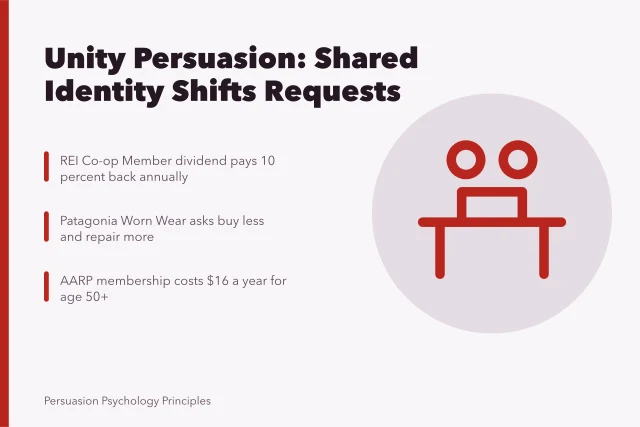
| REI | Outdoor enthusiasts who love fresh air | Join #OptOutside on Black Friday and get paid to play outside | Strong brand loyalty and press coverage |
| Patagonia | Environmental activists who fight climate change | Support sustainability projects and attend protests | High employee retention and mission alignment |
| AARP | Adults 50 and older who want to age well | Volunteer, vote, or share stories with peers | Member engagement and political influence |
| Sephora | Beauty lovers who swap tips and reviews | Write product reviews and attend in-store events | Community growth and free word-of-mouth marketing |
| Harley-Davidson | Motorcycle riders who value freedom | Join group rides and buy branded gear | In-group loyalty and repeat purchases |
| Ben & Jerry's | Social justice advocates who want change | Back a cause campaign like climate action | Polarized but deeply loyal fans |
Example: REI and the Shared Outdoor Identity
REI closes its stores on Black Friday and pays employees to enjoy the outdoors. The company asks customers to join the #OptOutside campaign. Shared identity as outdoor lovers makes the request feel like a group activity. This works because employees and customers see themselves in the same story.
For a deeper look at how this ask shifts, see unity principle persuasion examples.
Example: Patagonia and Mission-Driven Employees
Patagonia hires people who care about the environment. The company frames work requests as part of a shared mission to protect the planet. When a manager says "we need to fix this because we are environmentalists," the request aligns with identity. Employees often respond with extra effort. But if the company pollutes, the same appeal backfires.
Example: AARP and Age-Based Community
AARP advocates for Americans aged 50 and older. It asks members to volunteer, vote, or share stories. The shared identity of being an older adult makes the request feel like helping the group. This works in workplaces with older employee resource groups. But it can exclude younger workers if not framed carefully.
Example: Sephora and Beauty Insiders
Sephora's Beauty Insider program creates a community of makeup fans. The company asks members to review products and attend events. Shared identity as a beauty lover makes the request feel like a fun group activity. This works when the brand genuinely listens to feedback. It fails if members feel used for free marketing.
Example: Harley-Davidson and Rider Groups
Harley-Davidson owners often join the Harley Owners Group (HOG). The shared identity of being a rider makes requests to join rides or buy gear feel natural. The company asks members to recruit friends. This works because the in-group is strong and visible. It backfires if the brand ignores rider safety concerns.
Example: Ben & Jerry's and Social Justice
Ben & Jerry's ties its brand to social justice. It asks employees and customers to support causes like climate action. Shared identity as activists makes the request feel like a moral duty. This works with loyal fans. But it can polarize people who disagree with the cause.
When Shared Identity Backfires
Shared identity appeals backfire when they feel like manipulation. A manager who says "we are family" before asking for unpaid overtime destroys trust. dark pattern describes designs that trick users into unintended actions. In workplaces, a fake unity appeal can be a dark pattern of persuasion. It can also violate US laws if it deceives workers or consumers.
A Self-Check Before You Try It
Use this numbered list before making a unity-based request:
- Write the shared identity in one sentence. Is it real or invented?
- Ask if the request benefits the group or only you.
- Check if the appeal excludes people who do not share the identity.
- Confirm that you have consent and transparency.
- Test the appeal with a small group first.
Before you appeal to shared identity, ask: is this identity real and does the request serve the group?
Run this check with a colleague before you speak. If any answer makes you uneasy, rewrite the request. A real shared identity does not need pressure.